
Behind The Raise: Scooch
By Toby Hicks
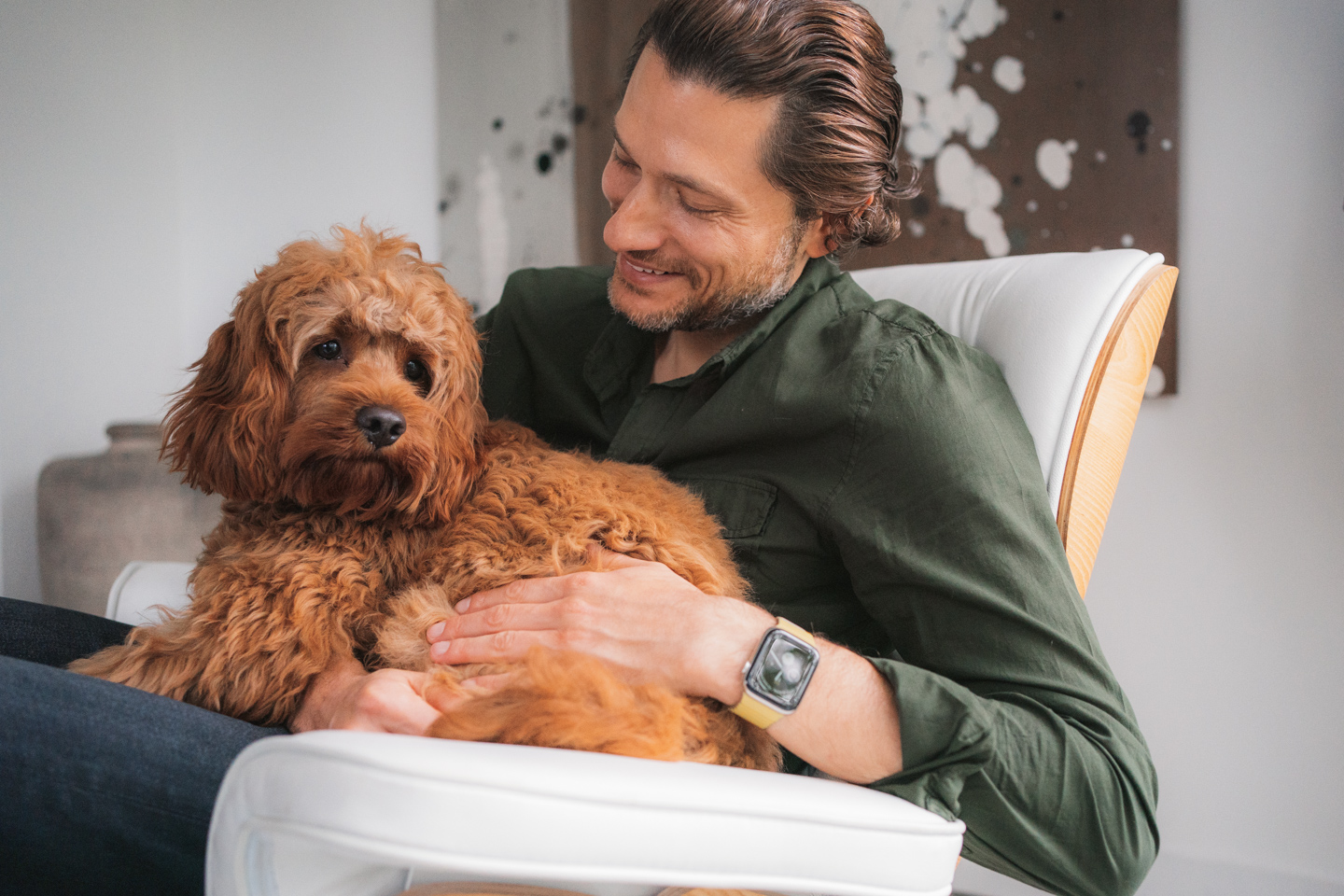
In our latest Behind The Raise interview, we speak to Baris Ozaydinli, founder of Scooch, a proactive dog-health platform combining human-grade functional supplements with Rio AI, its care-intelligence layer. Inspired by his own dog Rio, the repeat founder has grown Scooch to £3.3m in lifetime revenue and over 105,000 orders.
He shares what attracted investors, why he raised via AIN, and, as both founder and angel, the big mistake he thinks investors are making with their portfolios right now. Plus he shares his top tips for anyone raising for the first time.
Tell us about Scooch and how you came up with the idea?
Scooch is a proactive dog-health platform helping pet parents move from reactive, crisis-led care to more personalised, preventative everyday health.
Today, that means human-grade functional dog-health supplements sold through recurring subscriptions, supported by Rio AI, our care-intelligence layer that helps build living dog-health profiles, connect symptoms to products and routines, and personalise care over time. The bigger mission is simple: give pets a voice before problems become expensive, stressful or irreversible.
The idea came from my own dog, Rio. Like many families, we became dog parents during COVID. Rio had recurring issues (itching, digestive problems, the kinds of things many dog owners normalise until they become bigger problems). What surprised me was how fragmented the experience felt. You had vets, food brands, supplement brands, Google searches, Facebook groups and guesswork, but no one really owned the relationship with the pet parent day to day.
That felt broken to me. I had spent much of my career building consumer brands and technology businesses, including FitWell, an AI-powered fitness coaching app that scaled to millions of users globally. With Scooch, I saw a chance to apply the same preventative, personalised, data-led thinking to pet health.
We started with physical products because trust in pet health has to be earned. If a product helps a dog with allergies, digestion, joints, calming or anal-gland issues, the relationship becomes real. From there, the opportunity is to build the intelligence layer around the pet: the profile, the routine, the reminders, the health history and the next best action.
What has attracted investors to your company?
I think investors have been attracted to three things: the quality of the founding team and founder-market fit, the size and timing of the pet-health opportunity, and the fact that Scooch is not just an idea; it is already a real recurring pet-health business.
I am an exited repeat founder with a background across consumer brands, wellness technology and product innovation. Scooch also comes from a very personal place: Rio was the reason I saw the problem so clearly. That combination of relevant experience and lived founder-problem fit has helped investors understand why we are well placed to build in this category.
The second point is timing. The pet market has changed dramatically over the last decade. Many of the trends we have seen in human health and wellness, such as personalisation, preventative care, functional nutrition, premiumisation and data-led guidance, are now moving into pet care. That is being driven by two big structural trends: the humanisation of pets and the premiumisation of pet care.
On the traction side, Scooch has now generated £3.3m in lifetime revenue, fulfilled 105,000+ lifetime orders, and built 11,603 dog-health profiles. The part that has sharpened our investor story recently is the Guardian cohort, our highest-value proactive dog parents. We have identified 2,783 Guardians who have generated £1.4m lifetime revenue, with £412 median LTV, 5.4x LTV/CAC and 97.2% subscription participation.
That tells investors something important: this is not just generic DTC traffic. There is a segment of dog parents who behave differently when you give them targeted products, better guidance and a more personalised relationship.
The third point is the AI layer. Rio AI is not being positioned as a separate moonshot detached from the business. It is the intelligence and retention layer inside Scooch, helping us understand the pet, personalise the journey and compound the relationship over time. I think that combination (recurring pet-health commerce plus proprietary care context) is what makes the opportunity interesting.
Why did you raise via Angel Investment Network?
Angel Investment Network is useful because it gives access to a broad, international base of angels who may not all fit a traditional VC pattern. For a business like Scooch, that matters. We are in a large, emotional and resilient category; we have real revenue and repeat behaviour; and we are building a long-term platform in a market many people personally understand because they have pets themselves.
So the reason is simple: AIN gives us a way to reach the kind of investors who can understand the scale of the opportunity, relate to the problem, and potentially add more than just capital.
What is one thing investors might be surprised about the pet health industry?
I think many investors underestimate both the scale of the market and how broken the everyday pet-health journey still is.
In the UK alone, the pet-care market is worth more than £20bn, and annual vet bills are around £5bn. Pet-health spending is also growing quickly, driven by pet humanisation, premiumisation and the fact that people increasingly see their pets as family members. When a dog is unwell, the emotional intensity is extremely high, people will spend, worry, research symptoms at midnight and try almost anything when something feels wrong.
But the infrastructure around that behaviour is still very fragmented. Most pet care is reactive. Owners notice a symptom, search online, ask a friend, maybe go to the vet, try a food, try a supplement, then forget what worked. There is rarely a living health profile, a longitudinal record, or a trusted system helping them connect the dots across diet, behaviour, symptoms, routines and outcomes.
That is surprising because in human health, wellness and fitness, consumers already expect personalisation, tracking, coaching and preventative guidance. In pet health, much of the market is still selling products in isolation.
The opportunity is not simply to sell more supplements or food. It is to own the proactive care relationship: what is happening with my dog, what should I do next, what should I track, when should I escalate, and how do I build better daily habits?
You have an interesting perspective as both a founder and an investor. What mistake do you think angels are commonly making with their portfolios at the moment?
The biggest mistake I see is confusing excitement with probability-weighted return.
I am very bullish on AI. I use it every day, we are building with it at Scooch, and I think it will change almost every industry. But as an investor, being bullish on a theme does not mean every company with that theme is a good investment.
A lot of angels are currently over-rotating towards the most exciting stories (AI, space, robotics, frontier tech) and underweighting businesses that may look less fashionable but have clearer customer behaviour, revenue quality and exit paths. There is nothing wrong with having moonshots in a portfolio. In fact, you probably need some. But if every cheque is a moonshot, the portfolio becomes very fragile.
What are your top tips for anyone raising investment for the first time?
First, prove the first few milestones before you raise external capital. Before asking other people to invest, founders should ask themselves: have I proved there is a real problem, real demand, and some reason to believe I am the right person to solve it? That proof does not need to be perfect, but it should be real.
Second, start before you need the money. Fundraising almost always takes longer than expected, and the worst time to raise is when you are already under pressure.
Third, do not confuse interest with commitment. Investors can be positive, helpful and enthusiastic without actually being ready to write a cheque. Momentum only counts when it turns into committed capital.
Fourth, be clear about what is proven and what is still a hypothesis. Early-stage investors know there will be risk. What they want to see is that you understand the risk and have a plan to reduce it.
Fifth, make the story simple enough to repeat. If an investor cannot explain your business to someone else after the meeting, your pitch is not doing its job. This is something we have had to work hard on at Scooch. The clearer and simpler the story becomes, the easier it is for investors to understand the opportunity.
Sixth, be open-eyed about the terms and the people you are taking money from. Investment is a long-term relationship, not a transaction. The right investors can help the founder and the business through the next stages; the wrong investors, or adverse terms, can create problems for years. Founders should protect enough ownership, control and flexibility to keep building the company properly.
Finally, protect your own resilience. Fundraising is emotionally demanding because you are constantly being judged, often by people who only see a slice of the work. You need enough conviction to keep going, but enough humility to listen when the market is telling you something useful.
Are you looking for an angel investor to help fund your business? Join us at Angel Investment Network, where global investors meet the great businesses of tomorrow.


Related posts
Nino Judge, CEO of Flypop shares his advice for entrepreneurs about how he used Angel Investment Network to get his airline o...
Read more
arrow_forward
In our latest edition of #BehindTheRaise, we caught up with LifeSaver Co-Founder, Archie Wilkinson, about setting up a B-Corp...
Read more
arrow_forward
For our latest Behind The Raise interview we speak to Linas Pozerskis and Crystal Drury the co-founder of smart-EV and energy...
Read more
arrow_forward