
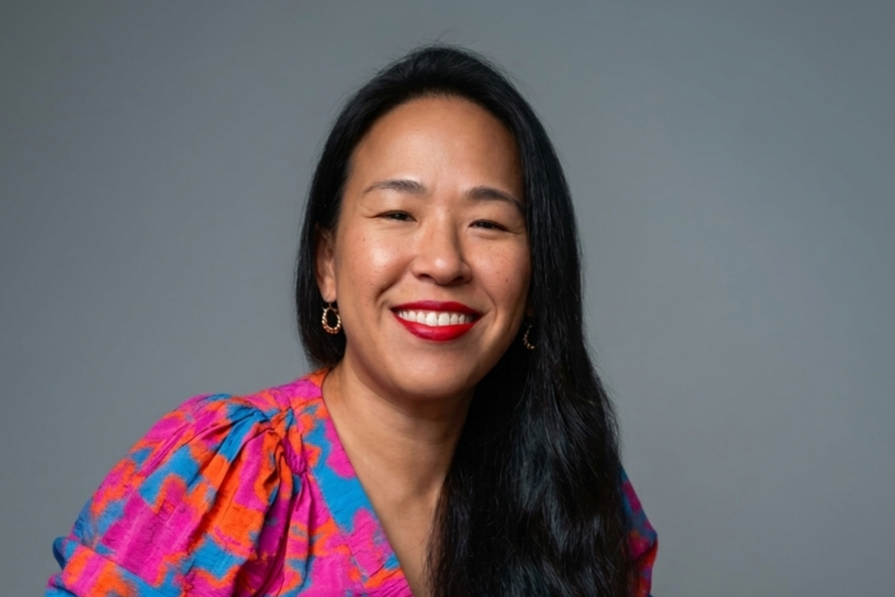
Ching-Yun Huang writes for e27: What Europe still doesn’t understand about Asian entrepreneurship
By Toby Hicks
In a piece for e27, Angel Investment Network COO Ching-Yun Huang sets out what European observers keep missing about Asian entrepreneurship. After twenty years inside British and European business culture, and a move back to Asia through Thailand, Malaysia and Taiwan, she gives her rare dual perspective.
Asian entrepreneurship starts from a different assumption
Her starting point is how unremarkable starting a business is across the region. The safety net across much of Asia is thinner than in Europe, so people lean on personal savings and their own enterprise rather than waiting for the state to step in. Building your own income is expected rather than aspirational, and Huang argues you can see the consequence on any street. A shop closes and within weeks someone has opened something else in the same unit. The space rarely sits empty.
That instinct runs down the generations. Her grandmother ran a small business until she died at 86. Catching up recently with friends from primary school, all now in completely different careers, she found investments coming up as casually as the weather.
London has enormous strengths, and the UK is still a genuine world leader in research, AI and deep tech. But high business rates, inflation and national insurance costs have made survival hard for a lot of high streets, and boarded-up shops have become an ordinary sight. You rarely see the equivalent in Taipei or Kuala Lumpur.
The founder data tracks the cultural pattern
This is not only impression. AIN’s global founder research shows the same thing in the numbers. Of the Asia Pacific founders surveyed, 56% work exclusively on their startup, the highest figure anywhere in the research. These are not hobby founders fitting a venture around a day job.
The age profile highlights that Asian entrepreneurship is not just a young person’s game. Seventy per cent of the founders surveyed were over 45, building on decades of industry knowledge, savings and contacts, and 39% are targeting a billion-dollar valuation. Ambition with experience underneath it.
Asia Pacific founders are raising with the world in mind
The most telling finding is how outward-looking these founders are. Only 1% are looking solely within their own borders for funding. 72% want a mix of local and international investors, and 27% are chasing international backers exclusively.
Huang reads that as cultural as much as commercial. In Taiwan and Hong Kong especially there is a long habit of looking outward, and for much of the past century emigrating to Canada, the US or the UK carried real status. That instinct now attaches itself to capital. Founders in markets that can feel tightly regulated are reaching for a more global system to raise from. At a moment when much of the world is drifting towards protectionism, Asia’s founders are walking the other way.
Singapore shows what deliberate policy achieves
The mindset is reinforced by what governments have actually built. Singapore is the clearest case, and it is no accident that it has been AIN’s largest Asian network for years. Startup SG was set up as a dedicated vehicle to back founders. The Startup SG Founder grant pairs seed funding with mentorship for first-timers, the EntrePass visa lets foreign founders relocate and build there, and a sustained push on STEM keeps feeding the talent pipeline any knowledge economy depends on. Very little of it is left to chance.
The gap that still needs closing
Huang is careful not to paint the picture as uncomplicated. Next to the UK and Europe this remains a younger ecosystem, with the rough edges that come with it. AIN’s research found that a quarter of founders do no meaningful due diligence on their investors beyond a basic online search. In a region where cash flow is the number one challenge, named by 78% of startups surveyed, the wrong investor can do as much harm as no investor. Who writes the cheque matters as much as the cheque.
What it means for investors
The lesson Huang draws from working both sides is a simple one. When starting a business is a normal part of how people think about work and money, you get founders who commit harder, think more globally and weather more. Singapore shows what becomes possible when a government takes that seriously. The ambition is already there. What it needs now is investors thinking on the same global scale.
Read Ching-Yun Huang’s full piece on e27
Are you looking for an angel investor to help fund your business? Join us at Angel Investment Network, where global investors meet the great businesses of tomorrow.


Related posts
As children head back to school, it’s a crucial time for startups to do the same! This ‘back-to-school’ season ...
Read more
arrow_forward
Three of Angel Investment Network’s senior team have been named in the 2022 edition of the prestigious Spear’s 500. T...
Read more
arrow_forward
Spoon Cereals, the UK challenger breakfast brand best known for its award-winning, taste-led granola, has raised £250,000 th...
Read more
arrow_forward