Behind The Raise: Peripear
By Toby Hicks
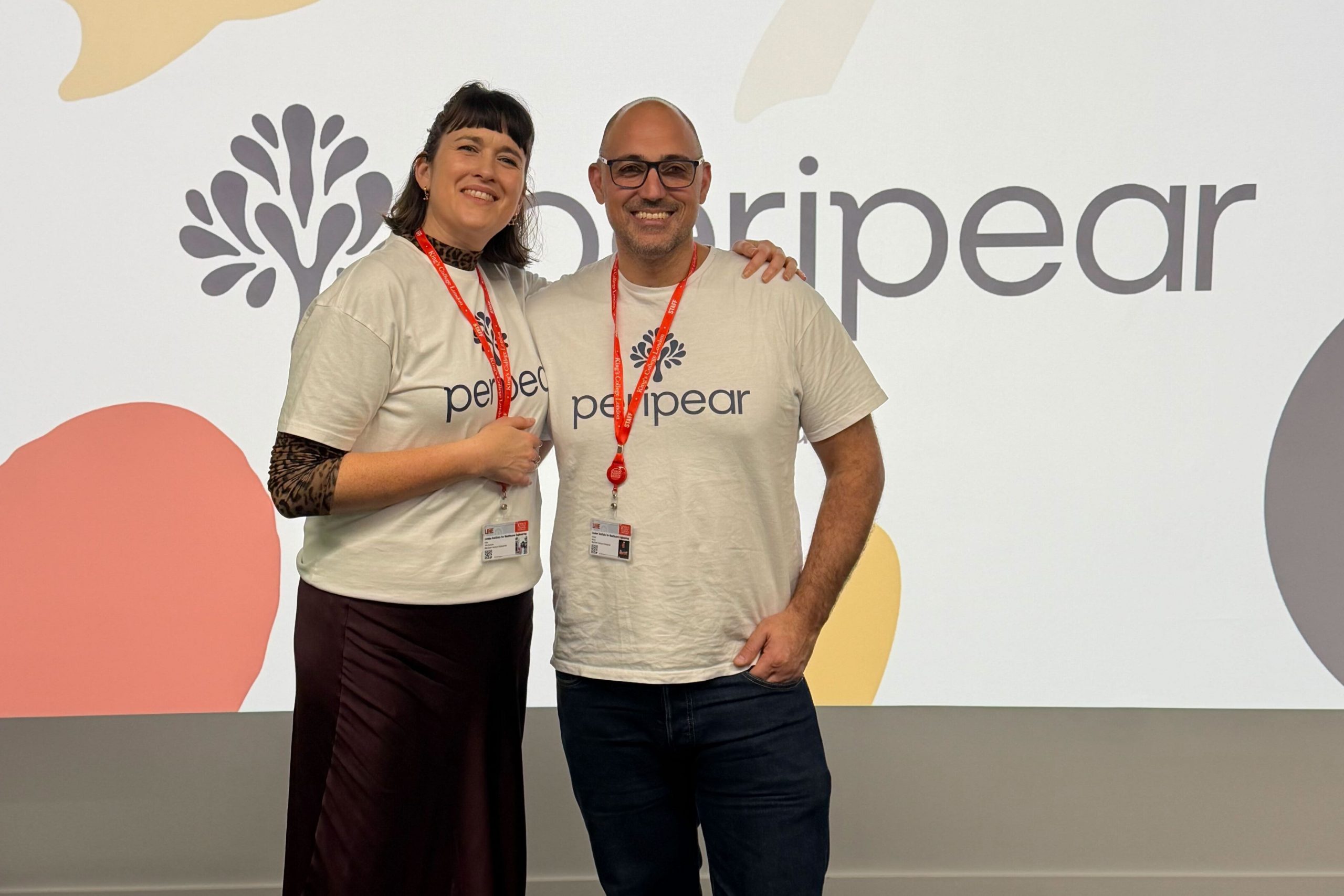
After 14 years as a midwife, Nina van Schaick watched hundreds of women suffer preventable birth injuries and decided to build the solution herself. Her company Peripear has developed a hands-free wearable device that delivers controlled therapeutic warmth during labour, replicating an evidence-based intervention shown to reduce severe tearing by up to 50%.
In our latest Behind The Raise interview, fresh from winning the Female Founders pitch competition at SCALE, Nina discusses the scale of a problem affecting 90% of women who give birth vaginally, how her clinical background gives Peripear an edge, the company’s route to market across Singapore and the US, and her advice for female founders tackling the fundraising journey.
Congratulations on winning the Female Founders pitch competition at SCALE. What did that experience mean to you and for Peripear?
It came a bit out of the blue to be honest. When you’re deep in the day-to-day of building a company, the regulatory submissions, the hospital conversations, the fundraising, you don’t always stop to take stock of how far you’ve come. Winning at SCALE was one of those moments where you’re forced to look up. The quality of the other founders in the room was exceptional, so to be selected felt like genuine validation, not just of the idea, but of the execution. For Peripear it opens doors. For me personally it was a reminder that what we’re building matters to people beyond our immediate network.
Tell us about Peripear and how you came up with the idea?
I didn’t come up with the idea so much as I couldn’t ignore it any longer. After 14 years as a midwife I had watched hundreds of women tear during birth — injuries that affect their continence, their sex lives, their mental health, sometimes for the rest of their lives. And I knew there was an evidence-based intervention that could prevent it. Warm compresses, applied to the perineum during crowning, reduce severe tearing by up to 50%. The evidence has been there for over a decade.
The problem is that during crowning, caregiver’s hands are occupied. I’m monitoring the baby, supporting the mother, guiding the delivery. I cannot hold a compress that cools in two minutes. So despite our best intentions we don’t. And neither does almost anyone else, fewer than 15% of women globally receive this intervention.
At some point I stopped waiting for someone else to solve it and started building the solution myself. That became Peripear.
What is the scale of the problem you are addressing?
It’s enormous, and almost entirely invisible, which is part of why it has gone unaddressed for so long.
90% of women who give birth vaginally experience perineal trauma. In the UK alone that is 270,000 women every year. Severe tears cause lifelong incontinence, in 40% of cases, chronic pain, sexual dysfunction, and in many cases PTSD. The NHS spends £260 million annually treating these injuries, plus another £30 million in litigation for what are largely preventable harms. In the US the figure reaches $2.4 billion in direct costs annually.
And it disproportionately affects Black and Asian women, who experience 3 to 4 times higher rates of severe tears. It is a women’s health crisis with a health equity dimension that makes it even more urgent.
The reason it has stayed invisible is simple: it happens at birth, it involves an intimate part of the body, and women are expected to recover and get on with it. But the consequences are lifelong and they are serious.
How does the device actually work, and what does the clinical evidence show?
The device is a hands-free wearable that sits against the perineum during the second stage of labour. It delivers controlled therapeutic warmth, maintaining 38°C or above, throughout the critical window of crowning, without any clinician involvement once it is in place. It integrates controlled moisture delivery with targeted heating, which together replicate and standardise the warm compress intervention that the clinical literature has validated.
The evidence base for the underlying intervention is robust. Published studies show warm perineal compression reduces severe tears by up to 50%. What Peripear does is make that intervention actually deliverable, consistently, safely, without adding a single extra task to an already stretched midwife.
We completed a feasibility study at Hadassah Hospital in Jerusalem in January 2026, with 10 participants and 4 clinicians. The results showed strong user acceptability, safe skin tolerability, and seamless workflow integration. One of the participants asked to use the device at her own upcoming birth. That told us everything we needed to know.
You come from a clinical background rather than a traditional startup world. How has first-hand understanding shaped the way you are building the company?
In every possible way, and I think it’s our single greatest advantage.
I understand the workflow at the most critical moment of labour. I know what a midwife’s hands are doing, what she can and cannot put down, what a labouring woman needs, and what hospital procurement teams actually care about. When we sit in a room with a Head of Obstetrics in Houston or a clinical director in Singapore, I’m speaking their language because it is my language.
It also means we have never built something that works in theory but fails in practice. Every design decision has been made with clinical reality in mind. Our product has been shaped by real clinicians and real patients at every stage..
The honest answer is that most people building in women’s health are not women’s health clinicians. I am the user, the validator, and the founder simultaneously. That is unusual and it matters.
Who is the target customer, and how do you see the route to market?
Our primary customer is the hospital labour and delivery unit, a B2B model. We target maternity hospitals with 2,500 or more births per year, where the clinical need is high, the procurement infrastructure exists, and the competitive dynamics between hospitals create genuine urgency for adoption.
We’re entering via Singapore first, where we have MOUs signed with NUHS and KKH, covering around 50% of all births in the country, because the regulatory pathway is faster and the market is concentrated. That gives us first-in-human data ahead of our US commercial launch.
In the US, which is our primary scale market, we completed a five-site hospital tour in March 2026, Texas Children’s, Methodist, Memorial Hermann, UPMC Magee-Womens, and UConn. Every site expressed strong interest in piloting, with commercial clauses that convert successful pilots into procurement contracts. At $200+ per unit with no reimbursement dependency, the economics are straightforward for hospitals; every prevented severe tear saves them $15,000 to $70,000 in treatment costs absorbed within their fixed birth bundle.
How have you found the fundraising journey to date, and how have you managed this while running the company?
Honestly? It has been the hardest part. Not because the conversations have been bad, most of them have been genuinely good, but because fundraising as a female founder in MedTech, for a product that involves an intimate part of the body that people are not used to talking about, requires you to walk into rooms and make people comfortable with something they would ordinarily rather not think about. That takes energy.
What has helped is having an awesome co-founder in Evi who brings a different kind of credibility to those rooms, a Cambridge PhD, a decade of MedTech entrepreneurship, so that we complement each other rather than having to carry everything alone.
Managing it alongside running the company is a constant tension. The only way I have found to do it is to be ruthless about what actually moves things forward and let go of everything else.
We’re closing our pre-seed now, £800k, 80% committed for Peripear, backed by Zinc VC, SyndicateRoom, and Hermesa and beginning to prepare for a Seed round in 2027.
What would you say to other female founders who are thinking about raising investment but feel uncertain about taking the leap?
I would say that the uncertainty doesn’t go away, you just get better at moving forward alongside it.
The rooms can feel intimidating. The questions can feel designed to catch you out. There will be investors who don’t get it, or who aren’t the right fit, and that is fine. What I have learned is that the investors who are right for you will feel different, they will lean in, ask better questions, and make you feel like you are in a conversation rather than an interrogation.
The most important thing is to know your numbers, know your clinical evidence, and know exactly why you are the right person to solve this problem. For me that last part has always been the easiest, because I have spent 14 years living it.
And practically: find your people early. The female founder community in the UK is genuinely generous with introductions, advice, and honest feedback. Use it. Don’t try to do this alone.
Are you looking for an angel investor to help fund your business? Join us at Angel Investment Network, where global investors meet the great businesses of tomorrow.


Related posts
In our latest Behind The Raise interview we interview Nick Torday, co-founder of Bower Collective, a sustainable consumer tec...
Read more
arrow_forward
Wedo is a Neo-Bank set up for the freelance community by 5 times founder Indiana Gregg (Indy); in our latest #BehindTheRaise ...
Read more
arrow_forward
Ben Hallett is the CEO and co-founder of fast growing EdTech company Vygo, built to ensure no student is left behind. In the ...
Read more
arrow_forward