
8 questions investors will ask before they back you
By Toby Hicks
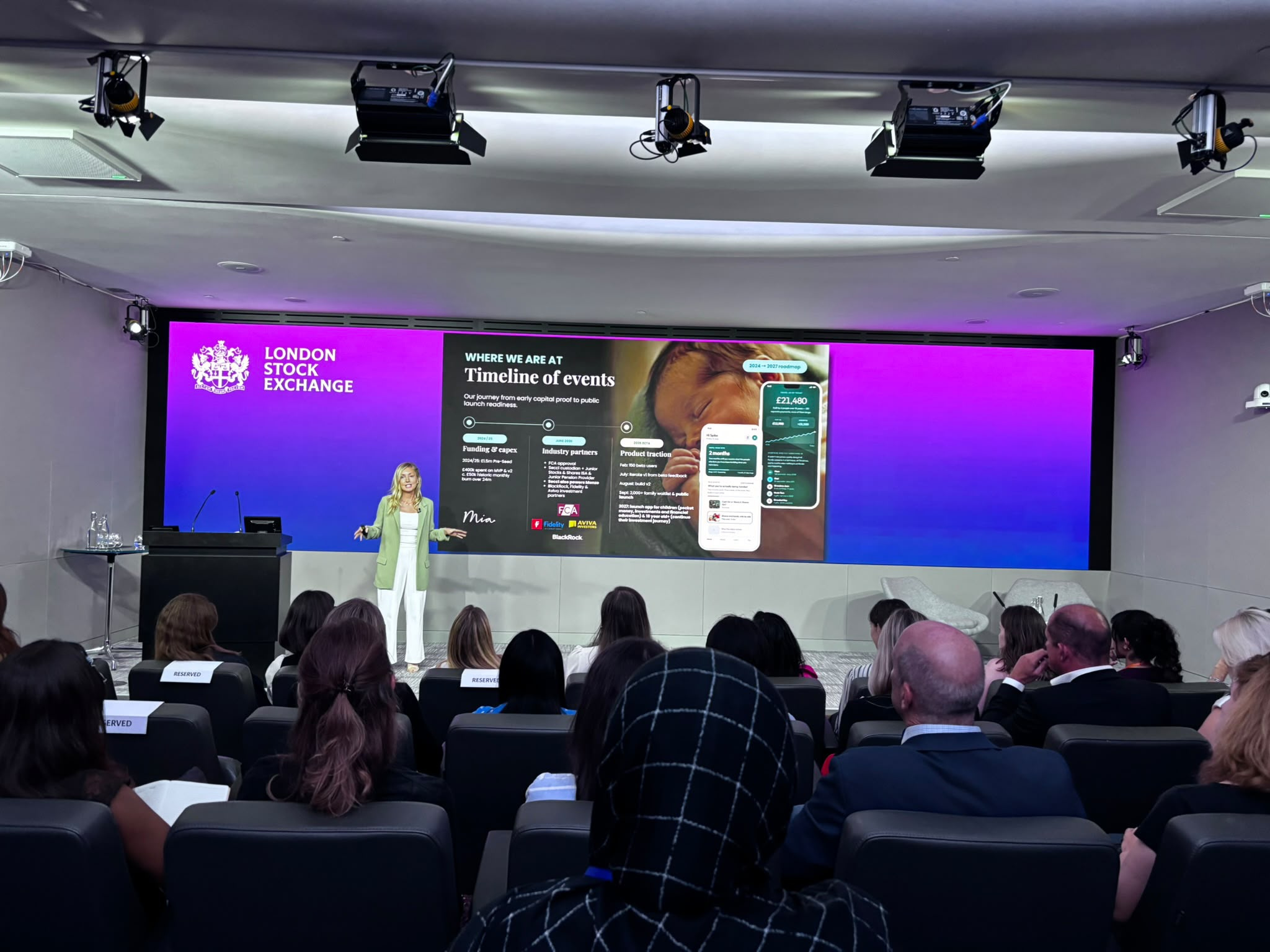
Most founders walk into an investor meeting unsure what they will be asked. The questions rarely change. Here are the eight that finalists faced at a female founders pitch evening at the London Stock Exchange, and how our Brokerage Team would answer the questions investors ask founders.
Pitching to investors is the most daunting part of the fundraising journey. You get a few minutes to explain years of work to people who can fund it or pass on it. Preparation is the only reliable way to steady the nerves and stiffen the spine. If you have already avoided the five mistakes that kill a pitch email and fixed where most decks blow it, this is the next test.
Helpfully, the questions rarely change. None of the eight asked at the Exchange was surprising. Between them they cover the three things an investor has to believe before writing a cheque: you can defend your position, keep your customers, and charge enough to grow. Know the answers and the room feels a good deal smaller. We put each question to experts across our network to help you prepare for the questions investors ask founders most commonly.
What questions investors ask founders about defensibility and ambition
1. Who are your competitors, and what is your moat?
Investors are testing whether your value proposition stacks up against the alternatives a customer already has. In our 2025 investor survey, a clear value proposition was the top reason angels gave for backing their most recent investment, named by 70%. The moat is whatever stops a better-funded rival copying you: IP, data you own, network effects, switching costs, a licence, distribution you control.
Matthew Louis, senior broker at Angel Investment Network, puts it simply: “Defensibility and the ability to differentiate yourself from competitors are critical.” Few early-stage companies have no rivals at a similar stage, he adds, so you need to show clearly why you are “the horse to pick” and why others will struggle to replicate what you have built.
2. How will AI affect the long-term future and durability of the business?
With AI capabilities accelerating, business cycles are moving faster. Investors want to know whether AI widens your lead or shortens it. Implement AI, the AI workforce platform co-founded by former Dragons’ Den investor Piers Linney, raised through AIN by moving the argument off the model altogether. Interfaces are easy to copy, it argued, so durable value sits in context, execution, trust, outcome data and distribution. In the company’s words, “the moat is no longer the tool. It is the system that turns intelligence into reliable, repeatable work.”
3. What is your ultimate ambition for the company?
Francesca Carlesi, CEO of the UK arm of digital banking app Revolut, told the finalists to set a goal big enough, bold enough and meaningful enough to be worth what building a company costs you. Investors ask because the answer tells them what the business could be worth, and roughly when. They are weighing it against a tougher exit market. In our 2026 survey, optimism about exits and IPOs averaged 2.9 out of 5, and 59% of angels said valuations are still too high. Ambition needs a credible route to a return.
What questions investors ask founders about customers, sales cycles and go-to-market
4. How are you managing retention?
Winning a customer costs money. Losing one wastes it. Bring churn, cohorts if you have the history, and evidence that the customers you keep spend more over time. Scooch, the proactive dog-health platform founded by Baris Ozaydinli, has taken £3.3m in lifetime revenue across more than 105,000 orders, with AI doing the retention work a support team once did. That is an answer investors want. Retention built into the product, with the numbers to prove it.
5. What do your sales cycles look like, and what are the routes to a sale?
How long a deal takes to close decides how much cash you need to reach the next milestone, and whether one channel is carrying the whole plan. Investors are wary of unproven models. In our 2024 survey, 46% of angels named the lack of a proven business model as a red flag.
The Brokerage Team’s advice is to have the evidence ready before conversations start, in a data room holding your deck, one-pager, business plan, sales pipeline and any market studies. When Spoon Cereals, the Yorkshire challenger granola brand, raised £250,000 through AIN as part of a £1.45m round, senior broker Alexander Caparros said: “Our investors recognised the quality of the team, the proven retail traction, and the signed licensing deals as a clear path to scale.”
6. How do you think about annual contract value for smaller customers?
Annual contract value is what one customer pays you in a year. Investors weigh your cost of selling against the size of the deal, and ask what smaller customers are there to do. According to Louis: “With early stage companies, investors want to see product-market fit so smaller customers can be very useful as long as you are providing them with value so that you can either increase prices or then aim for the bigger clients.”
7. What sits at the root of your customer acquisition and go-to-market?
Investors are judging execution. Know the channel that reliably brings customers in, what each one costs and how long you take to earn that back. One channel that works and can absorb more money beats a list of eight you have tried. In our 2026 survey, no evidence of demand was one of the two fastest routes to rejection, named by 23% of angels, level with a founder who cannot explain the problem clearly.
Investors back early-stage companies expecting them to multiply in value. A clear picture of who your customers are, how you will reach them and a realistic path to doing it shows the plan has been properly thought through.
The pricing question every founder should expect
8. Is your pricing value-based or cost-plus, and how will it change as you grow?
Cost-plus adds a margin to what delivery costs you. Value-based charges what the product is worth to the customer. Xavier Ballester, Director of Brokerage at Angel Investment Network, says it depends on the market: “Some can only just add a small margin while those with less competition can make it value-add. The latter doesn’t last long though as if you can make those big margins, competitors enter the fray and soon there is a price battle.”
Investors also want to see where your margins end up. Overoptimistic financials were the most cited flaw in our 2025 survey, named by 21% of angels. Louis says this is why a projection slide matters: “We all know that they are merely projections but they give an idea of margins and the final EBITDA % you are aiming for.” It also shapes valuation, he adds, by giving a rough idea of how a future exit might be priced.
Rehearse the answers before you pitch
Keep each answer short, specific and tied to your own numbers. Investors will forgive a young business with sparse data. They will not forgive a founder who has not thought about the question.
Marisa Scullion, Head of Marketing at Angel Investment Network, was in the room, and what struck her was how practical the questions were. “Competition, retention, sales cycles, pricing. None of it was a trick, and the founders who had their numbers ready stood out at once. The funding gap will not close on goodwill. It closes when more women-led businesses get into the right rooms, prepared.”
Answer these well and the conversation moves on to terms. Our top 10 tips for negotiating with investors cover what comes next, and it pays to know who you are getting into business with before you sign.
Are you looking for an angel investor to help fund your business? Join us at Angel Investment Network, where global investors meet the great businesses of tomorrow.


Related posts
We sat down with a series of different investors over the past few months. A former private equity operator turned specialist...
Read more
arrow_forward
Colin Boey is a global investor and syndicate leader, renowned for his strategic insights and successful ventures in the B2B ...
Read more
arrow_forward
Twenty years ago two childhood friends, with a shared passion for entrepreneurship, embarked on a journey to revolutionise th...
Read more
arrow_forward